

Renee Hodges, DPT, ITCA Coach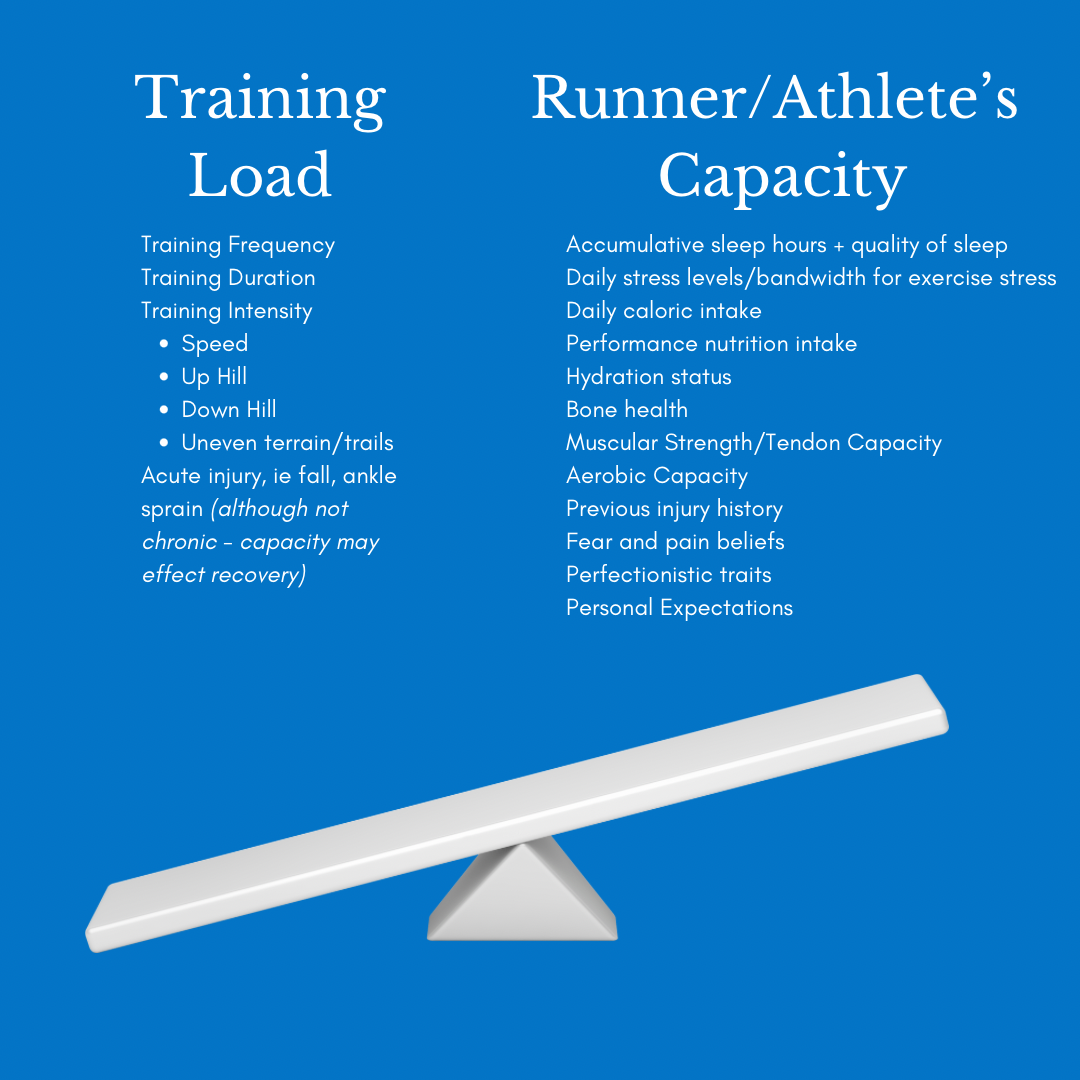
A misstep in training or a change in capacity typically occurs 2-6 weeks prior to the peak presentation of a running injury!
When it comes to tracking training load, the 10% rule falls short. Acute vs Chronic workload tracking offers a more accurate assessment of total training load.
As the saying goes, comparison is the thief of joy and the one thing we canNOT see just by looking at a runner’s training outcomes or data is their personal capacity. Below are common athlete scenarios. Although rarely does one factor play a major role, how would you rank these scenarios' effects on capacity?
🏃♀️🏃🏻♂️ Runner recently experienced a major life event (death of a loved one, birth, move, job change).
🏃♀️🏃🏻♂️Runner has a robust history of strength from playing multiple sports as a youth, high school, and/or college athlete.
🏃♀️🏃🏻♂️Runner has a history of osteoporosis, and although currently within the osteopenic range, recently discovered very low Vitamin D levels via blood work.
🏃♀️🏃🏻♂️Runner has a history of taking 4-8 weeks off of training when experiencing a soft tissue injury.
🏃♀️🏃🏻♂️Runner has a part-time job with extra time for training and recovery.
Our unique metrics of capacity are powerful performance monitoring and enhancement tools.
How do you track your training load and personal measures of capacity?